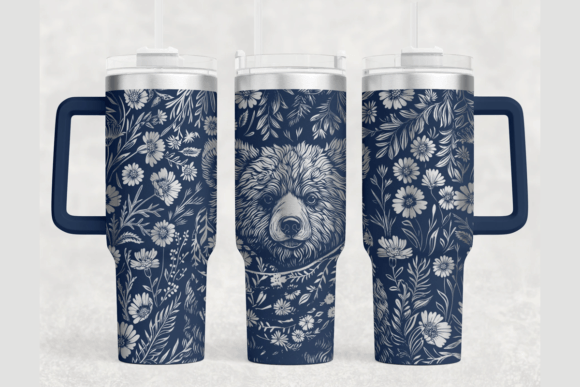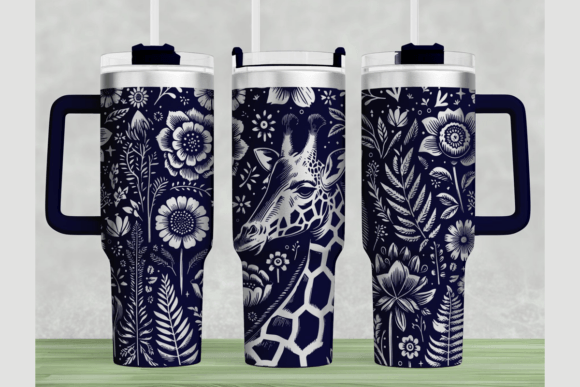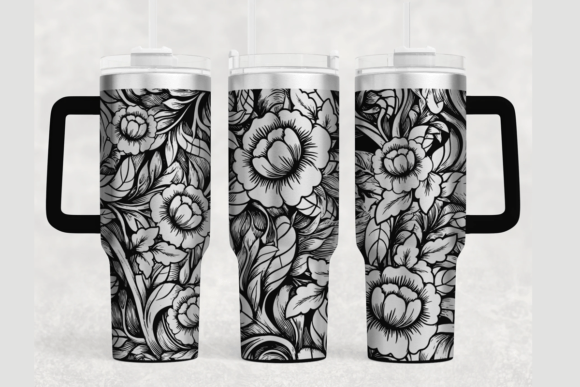
Flower 40oz Laser Tumbler Wrap SVG
As a designer who’s stitched over 3,000 custom projects—from boutique baby onesies to holiday market aprons—I opened the Flower 40oz Laser Tumbler Wrap SVG expecting something clean and scalable. What I found wasn’t just a tumbler graphic—it was a quiet, confident floral motif with soft curves, balanced negative space, and a rhythm that reads well at both 3” and 8”. It doesn’t scream; it invites. That matters—especially when you’re translating a digital file into a tactile, embroidered finished product.
A Real Moment: When This Design Landed on My Hoop
Last week, I used the Flower 40oz Laser Tumbler Wrap SVG as inspiration for a limited-run embroidered tote bag series—intended for a local florist’s Mother’s Day pop-up. Not for the tumbler itself, but for what the design *carries*: botanical warmth, handmade sincerity, and subtle sophistication. I resized it down to 4.5”, converted it to an embroidery file, and ran it on medium-weight canvas with tear-away stabilizer. The result? A crisp, breathable stitch-out—no puckering, no thread breaks—even with satin-stitched petals layered over gentle fill-stitched stems. Customers didn’t just buy the bag; they paused, traced the outline with their fingers, and asked, “Who drew this?” That’s the quiet power of intentional design—not just decoration.
Where This Design Truly Shines (and Where It Asks for Thought)
The Flower 40oz Laser Tumbler Wrap SVG works beautifully on structured, stable surfaces: sweatshirt yokes, tea towel corners, pillow covers, and baby blanket hems. Its moderate detail level—clear petal separation without micro-thin lines—holds up across fabric textures. On a textured linen apron? Yes. On a lightweight cotton poplin baby onesie? Still legible—but only if you reduce density slightly and use lightweight cut-away stabilizer.
It’s less ideal for high-stretch fabrics like jersey or curved caps without significant digitizing adjustments. The original layout assumes a flat, cylindrical surface—so stitching it directly onto a baseball cap front would compress the left/right symmetry and blur delicate transitions. Likewise, dense fill areas near the flower’s center need careful stitch-density review before embroidering on dark fabric: too many overlapping layers can mute dimensionality, especially in navy or charcoal.
- Best for: Custom apparel, embroidered patch blanks, tote bag designs, nursery decor, holiday embroidery (think Easter baskets or spring bridal showers), and small shop merchandise where botanical elegance supports brand voice.
- Use carefully on: Thin or sheer fabrics, stretchy knits, heavily textured weaves (like burlap), and products requiring frequent machine washing—unless paired with secure underlay and appropriate thread weight (e.g., 40wt polyester over 60wt for durability).
- Avoid direct use for: Tiny hoops under 4”, intricate applique layers without manual repositioning, or commercial embroidery runs where automatic color changes must handle more than 3–4 thread stops—check your digitized version first.
What This Design Says Before a Single Stitch Is Laid
Customers don’t see SVGs—they see outcomes. And the Flower 40oz Laser Tumbler Wrap SVG communicates care. Its proportions suggest intention, not algorithm. That translates directly to perceived value: a hand-embroidered kitchen towel featuring this motif feels like a curated gift, not mass-printed decor. For Etsy sellers, that nuance builds trust. For craft fair vendors, it helps your booth stand out among busier, louder patterns. Even in a printable mockup for client approval, it reads as refined—not generic clip art.
But here’s what I watch closely: how the design behaves across backgrounds. I always test the Flower 40oz Laser Tumbler Wrap SVG in black-and-white mockups first—not just for contrast, but to confirm visual hierarchy holds without color crutches. On light fabric, the inner details sing. On dark, I lean into matte thread or add a subtle shadow underlay in the digitizing stage. Either way, it retains its identity.
Practical Notes Every Embroidery Designer Should Run Through
Before cutting fabric or loading your hoop:
- Test on scrap first—especially if pairing with textured or blended fabrics (like cotton-linen or brushed poly-cotton).
- Review thread color contrast deliberately: mint on cream reads softly; burgundy on oat reads richly—but avoid pastel-on-pastel combos unless you’ve confirmed stitch clarity.
- Confirm hoop size compatibility. While the SVG scales cleanly, your embroidery file’s physical dimensions must match your machine’s max hoop capacity. Don’t assume “40oz wrap” means it fits a 6x10 hoop—verify actual stitch area.
- Inspect small details at 200% zoom in your embroidery software: are petal tips sharp? Are stem connections smooth? If not, minor cleanup saves hours later.
- Check licensing before selling finished items or bundling the file digitally. Since the listing states “YOU WILL RECEIVE – 1 SVG files Designed for 40oz Tumbler,” confirm whether personal use, small business resale, or digital redistribution is permitted—this isn’t implied by format alone.
- Use proper stabilizer: medium cut-away for knits, tear-away for stable wovens, and fusible + tear-away for lightweight silks or rayons.
Final Thought: Design That Grows With Your Craft Business
The Flower 40oz Laser Tumbler Wrap SVG isn’t a one-off tumbler graphic—it’s a versatile design asset. I’ve reused its core floral shape as a border on embroidered napkins, simplified it into a monogram accent for personalized baby blankets, and even extracted single petals for custom iron-on patches. That flexibility—rooted in smart spacing, intentional line weight, and balanced scale—is rare in mass-market graphics.
For crafters building a cohesive line—say, a spring collection of embroidered totes, tea towels, and matching hair clips—this design anchors the aesthetic without demanding uniformity. It adapts. It breathes. And most importantly, it stitches like it was made for real hands, real machines, and real customers who notice the difference between thoughtful design and filler graphics.