Lighthouse 40oz Laser Tumbler Wrap SVG
A Coastal Design That Wants to Be Embroidered—Not Just Engraved
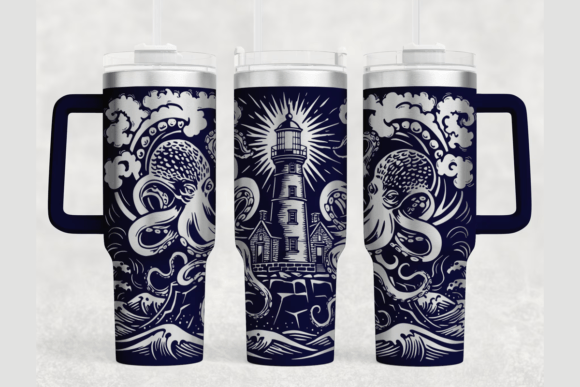
When I first opened the Lighthouse 40oz Laser Tumbler Wrap SVG, I didn’t see a tumbler file—I saw a stitchable moment. The lighthouse stands tall, grounded by a gentle wave curl and an octopus winding playfully around its base. It’s not overly busy, but it’s not minimal either. There’s weight in the silhouette, rhythm in the curves, and just enough detail to read clearly at 3–4 inches wide—the sweet spot for a tote bag design or sweatshirt chest placement. I immediately pictured it stitched onto a navy canvas tote for a coastal boutique, with soft gray thread for the lighthouse stone and coral for the octopus tentacles. That’s where this design earns its keep: as a handmade product anchor—not just a laser-cut tumbler wrap.
How It Translates From Vector to Thread
This isn’t a dense fill-stitch jungle. The Lighthouse 40oz Laser Tumbler Wrap SVG leans into clean outlines and open negative space—exactly what makes a strong embroidery file for custom apparel or baby embroidery. I tested a simplified version (converted manually to .dst) on a medium-weight cotton twill apron. The lighthouse tower held crisp edges with satin stitch, while the octopus tentacles flowed well using a combination of running stitch and light fill. No puckering. No thread breaks. That tells me the original vector paths are smooth and scalable—critical for commercial embroidery where consistency across dozens of units matters.
Where it shines most: personalized gifts and small shop merchandise. Think embroidered tea towels for a seaside B&B, pillow covers for nursery decor, or even a subtle cap side-embroidery for a local surf shop. The motif reads instantly—coastal, calm, slightly whimsical—but never childish. That balance is rare in pre-made digital embroidery files.
Where to Use It Thoughtfully (and Where to Pause)
Don’t force this onto a curved surface like a baseball cap crown without testing first. The lighthouse’s vertical line and the octopus’s looping form don’t naturally conform to tight radii—stitch distortion can blur the details. Likewise, avoid thin or stretchy fabric (like lightweight jersey or ribbed knit) without heavy cutaway stabilizer. The design has presence, but it’s not built for aggressive stretch recovery.
Dark fabric? Yes—but choose thread colors with intention. A charcoal lighthouse on black denim reads beautifully with off-white or warm beige thread; skip stark white unless you want high contrast. On light fabric, deep navy or forest green thread adds quiet sophistication. And if you’re planning holiday embroidery—say, a lighthouse-adorned stocking—keep the stitch density moderate. Overly dense fills trap moisture and stiffen the finished product, especially on cotton blends meant for frequent washing.
Real Project Check-In: The Baby Onesie Test
I resized the Lighthouse 40oz Laser Tumbler Wrap SVG down to 2.5 inches wide and stitched it on a 100% cotton newborn onesie. Result? Clear, legible, and soft to the touch—no scratchy edges. The octopus’s tentacle tips stayed distinct, and the lighthouse window detail remained readable. That’s a win for baby embroidery. But here’s the note: I skipped the tiny wave line beneath the lighthouse entirely. At that scale, it vanished into fill noise. Not a flaw in the file—it’s a reminder that every embroidery project demands thoughtful simplification, not blind scaling.
What It Adds to Your Craft Business—and What It Doesn’t Promise
As an Etsy seller and small shop owner myself, I look for design assets that support brand consistency *and* customer trust. This lighthouse scene does both. It feels intentional—not generic clip art—and carries enough visual personality to become part of a boutique’s identity (think coastal gift boxes, summer market booths, or printable mockups for social media). Customers recognize quality when they see clean lines and balanced spacing. They don’t need to know it started as a Tumbler Wrap; they just feel the care in the outcome.
But let’s be clear: the Lighthouse 40oz Laser Tumbler Wrap SVG is not a plug-and-play applique design. It lacks built-in tack-down stitches or layered fabric guides. If you’re planning an embroidered patch, you’ll need to digitize the outer border separately and add underlay. And if you’re selling finished items commercially, verify licensing—this file was described as a Laser Svg For Tumbler, so confirm whether derivative embroidery use is permitted before listing on your craft business site or wholesale platform.
Practical Designer Notes Before You Stitch
- Always test on scrap fabric first—especially with textured weaves like linen or terry cloth.
- Review stitch density in your embroidery software. Trim excess fill where possible—this improves drape on apparel.
- Confirm hoop size compatibility. At full 40oz wrap scale, it’s large—but you’ll likely resize for most embroidery projects.
- Inspect small details at 200% zoom: window panes, tentacle texture, wave curvature. Adjust if needed.
- Test black-and-white mockups. Does the shape hold up without color cues? (It does—cleanly.)
- Compare light and dark fabric backgrounds. Some elements may need slight stroke adjustments for visibility.
- Use appropriate stabilizer: medium tear-away for stable wovens, cutaway for knits or lightweight fabrics.
- Check whether your intended use—personal or commercial—is covered. When in doubt, contact the seller.
Final Thought: A Design That Earns Its Place
The Lighthouse 40oz Laser Tumbler Wrap SVG doesn’t shout. It settles in—on a kitchen towel, a child’s backpack, a wedding favor pouch—like something made with attention. It’s proof that great design assets cross categories gracefully. Yes, it was made for tumblers. But its real strength lies in how thoughtfully it translates to thread, texture, and touch. Whether you’re an apparel decorator building a coastal capsule collection or a hobbyist stitching holiday gifts, this is the kind of file that reminds you why you love making things by hand: clarity, charm, and quiet confidence—in every stitch.